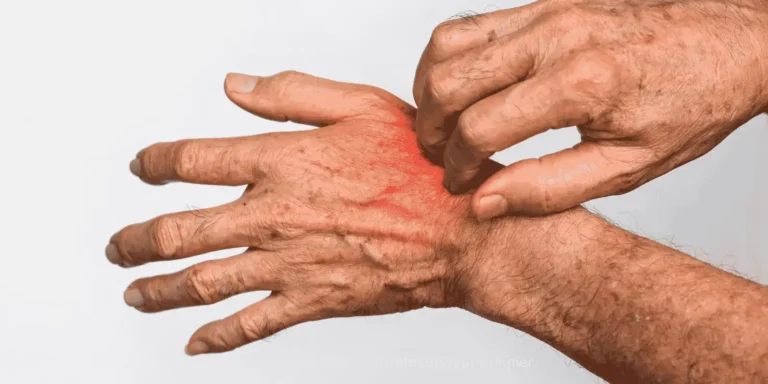
Allergy season brought the sneezing and watery eyes you expected. But now your skin is itchy too, with red patches showing up on your arms, neck, or face. Most people associate allergies with respiratory symptoms and don’t realize that skin reactions are just as common.
After 30 years of treating patients through allergy season, the skin complaints surprise people every year.
Start with ChatRx’s Free Symptom Checker
If your itchy skin showed up during allergy season, ChatRx’s free symptom checker helps determine whether it’s allergy-related, a skin infection, or something else in about 2 minutes. Getting the cause right matters for choosing the correct treatment.
Why Allergies Affect Your Skin
When your body encounters an allergen like pollen or pet dander, it releases histamine. Most people think of histamine causing sneezing and watery eyes. But histamine also triggers skin reactions, causing itching, redness, and sometimes hives or eczema flares.
Direct skin contact with pollen during high-count days can trigger reactions even if your respiratory symptoms are mild.
Allergy-Related Skin Conditions
Eczema flares during allergy season are extremely common. The skin becomes dry, red, and intensely itchy, often in the creases of elbows, behind knees, or on the face.
Hives appear as raised, itchy welts that can show up anywhere on the body. They come and go, sometimes lasting hours. Contact dermatitis from direct allergen exposure creates localized redness where the allergen touched skin.
When Itchy Skin Might Be an Infection
Not every itchy rash during spring is allergy-related. Fungal infections, bacterial infections like impetigo, and cellulitis can produce redness that gets mistaken for allergies. Infections tend to worsen steadily and may produce warmth, swelling, or pus.
If your rash is spreading, feels warm, or develops blisters or oozing, infection is more likely.
Treatment Approaches
Allergy-related skin symptoms respond to oral antihistamines, topical corticosteroid creams, and moisturizers. Showering after outdoor exposure helps reduce reactions. Skin infections need prescription antibiotics or antifungals instead.
Same-Day Treatment through ChatRx
If your skin symptoms suggest infection, a chat-based e-visit costs $25. No video call. If prescription medication is appropriate, it goes to your pharmacy that same day.
A Recent Patient Story
A jogger contacted ChatRx with an itchy red rash on both arms that appeared every spring. She assumed infection. Our assessment identified the pattern as contact dermatitis from outdoor pollen exposure during runs. Proper allergy management and post-run showers solved it.
The Bottom Line
Itchy skin during allergy season is common and treatable. When it might be an infection instead of allergies, ChatRx provides assessment and same-day prescriptions for $25.
This information is provided for educational purposes only and is not intended to replace professional medical advice, diagnosis, or treatment through ChatRx. If you have questions about a medical condition, talk with a qualified healthcare provider. Services like ChatRx can help connect you with licensed physicians.
Frequently Asked Questions
– Fragranced products
– Harsh soaps
– Alcohol-based lotions
Yes. Stress can amplify the body’s inflammatory response and worsen itching.